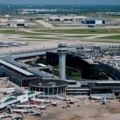

Introduction — Tokyo’s International Airports Overview (Haneda & Narita)
Tokyo is one of the busiest and most influential cities in the world, and to support its massive international connectivity, the city operates two major international airports: Haneda Airport (HND) and Narita International Airport (NRT). Together, these airports handle tens of millions of passengers every year and serve as the primary gateways for travelers flying into Japan. While both airports are considered “Tokyo’s international airports,” they operate very differently in terms of distance, airlines, transport options, facilities, terminal layout, and travel experience.
Many first-time visitors are often confused when they search for “Tokyo International Airport” because the term may refer to either Haneda International Airport, which is officially known as Tokyo International Airport, or Narita International Airport, which is located outside Tokyo but handles a majority of long-haul international flights. Understanding the difference between the two airports is extremely important for planning arrival times, choosing hotels, booking transport, and estimating travel time into the city.
✔ Haneda Airport (HND) — The Closer and More Convenient Airport
Haneda is officially named Tokyo International Airport and is located only 14 km from central Tokyo. It is considered one of the most efficient airports in the world, consistently ranking at the top for cleanliness, punctuality, passenger experience, and overall comfort. Although Haneda was originally focused on domestic flights, it has significantly expanded its international capacity through Terminal 3, making it a favorite among travelers who prefer short travel times, modern lounges, and easy access to the city.
Haneda also offers a highly connected transport network through the Tokyo Monorail, Keikyu Line, airport buses, taxis, and a variety of private transfers, making it the ideal choice for business travelers, short-stay visitors, and passengers arriving late at night or early in the morning.
✔ Narita Airport (NRT) — Major Global Gateway for International Traffic
Located about 60 km east of Tokyo, Narita International Airport is one of Japan’s most important global hubs. It handles a majority of long-haul international routes, including flights from North America, Europe, the Middle East, Australia, and Southeast Asia. Narita is a much larger airport with multiple international terminals, extensive airline operations, and a wider range of long-distance carriers.
Because of its distance from central Tokyo, Narita offers dedicated long-distance high-speed transport options such as the Narita Express (N’EX) and Keisei Skyliner, which link directly to major stations like Tokyo Station, Shibuya, Shinjuku, and Ueno. Despite the longer travel time, many travelers prefer Narita due to its bigger duty-free area, more airline lounges, and extensive international flight network.
✔ Which Airport Should You Choose?
Both airports are excellent, but they serve different types of travelers:
| Traveler Type | Best Airport | Why |
|---|---|---|
| Short-stay visitors | Haneda (HND) | Very close to Tokyo, fast transport |
| International long-haul passengers | Narita (NRT) | More global airline connections |
| Domestic → international transfers | Haneda | Easier domestic connections |
| Travelers going to Disneyland | Haneda | Shorter distance |
| Budget travelers | Narita | More low-cost carriers + cheaper flights |
✔ Why Tokyo Has Two International Airports
Tokyo’s population, economic activity, and tourism numbers are extremely high, making it impossible for a single airport to handle all traffic. Japan therefore developed two airports with different operational purposes:
- Haneda handles most domestic flights and a growing number of international routes.
- Narita handles the majority of long-distance and intercontinental flights.
Together, they create a smooth distribution of passenger traffic and ensure that Tokyo remains one of the most accessible global cities.
✔ Ease of Travel, Convenience, and Global Ranking
Both Tokyo airports consistently rank among the top 10 airports in the world for efficiency, cleanliness, facilities, and passenger satisfaction. Travelers often highlight:
- Extremely clean terminals
- Helpful staff
- Smooth immigration process
- Excellent security arrangements
- Clear signage in English
- Reliable public transportation
Tokyo airports are also known for their modern shops, themed dining experiences, premium lounges, duty-free brands, and seamless connectivity across Asia, Europe, America, and Oceania.
✔ What This Guide Covers
This comprehensive blog will help you understand everything about traveling through Tokyo’s international airports, including:
- Airport codes (HND & NRT)
- Terminal layouts
- Transport options to Tokyo city
- Distance and travel times
- Shops, food, lounges, and facilities
- Hotels near the airport
- Airport maps
- FAQs answering over 30 passenger questions
Whether you are preparing for your first trip to Japan or planning a connecting flight through Tokyo, this guide gives you all the information you need for a smooth travel experience.
Tokyo Airport Codes — HND & NRT Explained (With Comparison Table)
Tokyo is one of the few major cities in the world that operates two major international airports, each with its own globally recognized IATA and ICAO codes. These codes are extremely important for flight bookings, airport navigation, baggage labels, flight status checks, and identifying which Tokyo airport you are flying into or out of.
Many travelers get confused because the term “Tokyo International Airport” officially refers to Haneda Airport, but in global travel conversations, both Haneda (HND) and Narita (NRT) are commonly associated with Tokyo. Understanding the airport codes helps you avoid mistakes when reserving flights, booking airport transfers, or selecting hotels.
✔ IATA vs ICAO Codes: What They Mean
IATA Code (3 letters)
Used for tickets, timetables, boarding passes, airline websites, and passenger information.
Example: HND, NRT
ICAO Code (4 letters)
Used for air traffic control, aviation operations, flight path systems, and airport logistics.
Example: RJTT, RJAA
Both codes play different roles, but travelers interact most often with the IATA codes displayed on every boarding pass and luggage tag.
✔ Tokyo Airport Codes: Complete Comparison Table
Below is a simple and clear comparison showing the official codes for both Tokyo airports:
🛫 Tokyo Airport Code Comparison
| Feature | Haneda Airport | Narita Airport |
|---|---|---|
| Official Name | Tokyo International Airport | Narita International Airport |
| IATA Code | HND | NRT |
| ICAO Code | RJTT | RJAA |
| Airport Type | Domestic + International | International |
| Distance from Tokyo Station | ~14 km (closest airport) | ~60 km |
| Main Purpose | Short-haul & domestic flights, plus premium international routes | Major long-haul & international hub |
| Terminals | Terminal 1 (Domestic), Terminal 2 (Domestic + Partial Intl), Terminal 3 (International) | Terminal 1, Terminal 2, Terminal 3 |
| Most Common Search Query | “Tokyo International Airport code HND” | “Narita International Airport to Tokyo” |
✔ Why These Codes Matter
1. Flight Bookings
Airlines will mention HND or NRT clearly on booking pages. Choosing the wrong airport may change your hotel, transport, or itinerary.
2. Connections & Layovers
- Flying domestic? → More likely HND
- Flying international long-haul? → Often NRT
3. Airport Transfers
Transport cost and travel time vary significantly:
- Haneda to Tokyo → 20–30 minutes
- Narita to Tokyo → 60–90 minutes
4. Hotel Selections
Many hotels advertise “near Tokyo airport,” so always check the IATA code to confirm which airport they mean.
✔ Quick Summary
- HND → Closer, more convenient, officially “Tokyo International Airport.”
- NRT → Bigger international hub, more long-haul flights.
- Both airports serve millions of passengers and are essential for Tokyo’s global connectivity.
Terminals at Tokyo’s International Airports (Haneda & Narita Explained)
Tokyo operates two major international airports—Haneda Airport (HND) and Narita Airport (NRT)—and together they have six passenger terminals. Each terminal serves different airlines, flight types, and passenger categories. Understanding the terminal layout helps travelers plan smoother arrivals, departures, transfers, and airport navigation.
This section breaks down all terminals at both airports in a simple and clear way.
🇯🇵 HANEDA AIRPORT TERMINALS (HND)
Haneda Airport is officially known as Tokyo International Airport and consists of three main terminals. It is the closer, more convenient airport for entering Tokyo.
◎ Terminal 1 – Domestic Terminal
Terminal 1 is Haneda’s primary domestic terminal, home mainly to Japan Airlines (JAL) and affiliated carriers.
Key Features
- Used for domestic departures and arrivals
- Wide range of Japanese dining options
- Shopping areas, souvenir stores, convenience stores
- Direct access to rail (Keikyu Line & Monorail)
- Smooth boarding process with fast security lanes
Main Airlines
- Japan Airlines (JAL)
- Skymark Airlines
- StarFlyer (some routes)
◎ Terminal 2 – Domestic + Some International Flights
Terminal 2 originally handled only domestic flights by ANA but now includes a growing number of international departures and arrivals.
Key Features
- Modern architecture and open layout
- Observation deck with runway views
- ANA domestic & select international operations
- Direct connection to rail networks
- Premium lounges for ANA and partner airlines
Main Airlines
- All Nippon Airways (ANA)
- Air Do
- Solaseed Air
International Operations
ANA began operating certain international flights from Terminal 2 after its renovation, making it a hybrid-use terminal.
◎ Terminal 3 – Haneda’s Main International Terminal
Terminal 3 is the heart of Haneda’s international travel, offering a luxurious and seamless global passenger experience.
Key Features
- Serves all major international airlines
- Extensive duty-free shopping
- Wide range of restaurants, cafes, and themed dining
- Currency exchange, ATMs, and travel support centers
- Multiple premium lounges (ANA, JAL, SkyTeam, Oneworld)
- Direct connection to highways and monorail
Main Airlines Operating Here
- ANA
- JAL
- Air France
- British Airways
- Emirates
- Singapore Airlines
- Qatar Airways
- Cathay Pacific
- Many others
Terminal 3 is the best-equipped terminal for international passengers and offers fast immigration, modern facilities, and multi-language support.
🇯🇵 NARITA INTERNATIONAL AIRPORT TERMINALS (NRT)
Narita Airport handles a large portion of Tokyo’s long-haul international flights. It has three major terminals, each with different airlines, low-cost carriers, and alliance group allocations.
◎ Terminal 1 – The Major International Hub
Terminal 1 is the largest and busiest at Narita Airport.
Key Features
- Divided into North Wing and South Wing
- Primary hub for Star Alliance airlines
- Huge selection of duty-free shops
- Multiple lounges including ANA and Star Alliance lounges
- Wide choice of restaurants and cafes
- Direct access to Narita Express and Skyliner
Main Airlines
- ANA (All Nippon Airways)
- United Airlines
- Lufthansa
- Thai Airways
- Singapore Airlines
- Air Canada
- EVA Air
◎ Terminal 2 – Oneworld Hub + Major International Routes
Terminal 2 is the main terminal for JAL and Oneworld alliance carriers.
Key Features
- Premium lounges including JAL Sakura Lounge
- Excellent shopping and international dining
- Fast-track immigration for premium passengers
- Efficient baggage claim areas
- Transport connections to rail and bus
Main Airlines
- Japan Airlines (JAL)
- British Airways
- American Airlines
- Cathay Pacific
- Qantas
- Finnair
- Malaysia Airlines
◎ Terminal 3 – Low-Cost Carrier Terminal
Terminal 3 is specifically designed for low-cost carriers, offering a simpler and more budget-friendly environment.
Key Features
- Minimalistic, easy-to-navigate design
- Lower-cost dining and shopping outlets
- Direct walkway from Terminal 2
- Popular with budget travelers and regional flights
Main Airlines
- Jetstar Japan
- Peach Aviation
- Vanilla Air (previous operations)
- Spring Airlines
🛫 Quick Terminal Comparison Table: Haneda vs Narita
| Feature | Haneda Terminal 1 | Haneda Terminal 2 | Haneda Terminal 3 | Narita T1 | Narita T2 | Narita T3 |
|---|---|---|---|---|---|---|
| Use Type | Domestic | Domestic + Intl | International | International | International | Low-cost Intl |
| Main Airlines | JAL, Skymark | ANA, Air Do | ANA, JAL, global carriers | Star Alliance | Oneworld | LCCs |
| Distance to Tokyo | ~14 km | ~14 km | ~14 km | ~60 km | ~60 km | ~60 km |
| Facilities | Dining, shops | Observation deck | Duty-free, lounges | Lounges, shops | Premium lounges | Budget dining |
✔ Summary
Haneda’s terminals are modern, close to Tokyo, and extremely convenient for both domestic and international flights. Narita’s terminals are larger, more spread out, and primarily used by major global airlines and long-distance routes. Understanding which terminal your airline uses ensures faster navigation, proper planning, and a smoother airport experience.
How to Get From Narita International Airport to Tokyo City
Narita International Airport (NRT) is located about 60 km east of central Tokyo, making transportation an important part of your travel planning. Although it is farther than Haneda Airport, Narita offers some of the fastest, cleanest, and most reliable airport-to-city transportation options in the world. Whether you’re a business traveler, budget traveler, family visitor, or someone with heavy luggage, there are multiple ways to reach central Tokyo efficiently.
Below is a complete guide to all available transport methods from Narita Airport to Tokyo.
✔ 1. Narita Express (N’EX) – Fast, Direct, Comfortable
The Narita Express, operated by JR East, is the most popular and convenient train service connecting Narita to major stations in Tokyo.
Key Highlights
- Direct service to Tokyo Station, Shinjuku, Shibuya, Ikebukuro, Yokohama
- Spacious seating, luggage space, restrooms
- Free Wi-Fi on board
- Timely and reliable
Ideal For
Business travelers, tourists with luggage, passengers staying in central Tokyo.
✔ 2. Keisei Skyliner – Fastest Train to Ueno/Asakusa Area
The Skyliner is a high-speed premium train, known for being the fastest option from Narita to downtown Tokyo.
Key Highlights
- Non-stop connection to Ueno and Nippori
- Reserved seating
- Excellent punctuality
- Luggage space + quiet cabins
Ideal For
Travelers staying in Ueno, Asakusa, Akihabara, or Northeast Tokyo.
✔ 3. Airport Limousine Bus – Convenient Door-to-Door Service
The Limousine Bus connects Narita Airport to:
- Major hotels
- Tokyo Disneyland Resort
- Tokyo Station
- Shinjuku Station
- Shinagawa
- Roppongi
Key Highlights
- Comfortable seating
- No transfers required
- Best for families and travelers with heavy luggage
Ideal For
Hotels without nearby train access, group travelers, elderly passengers.
✔ 4. Regular JR and Keisei Trains – Budget Options
These local trains are slower but cheaper.
Key Highlights
- Cheapest way to reach Tokyo
- Frequent departures
- Useful for local Tokyo suburbs
Ideal For
Budget travelers and long stays.
✔ 5. Taxi – Expensive but Direct
A taxi from Narita to central Tokyo is convenient but costly because of the distance.
Key Highlights
- Door-to-door convenience
- 24/7 availability
- Ideal during late-night arrivals when trains stop
Ideal For
Passengers with mobility needs, large groups, late-night flights.
✔ 6. Private Transfers – Comfortable & Pre-Booked
Private cars (sedans, vans, limousines) can be booked in advance.
Benefits
- No waiting
- English-speaking drivers
- Hotel drop-off included
- Fixed rates
Ideal For
Luxury travelers, families, business trips.
⭐ Narita Airport to Tokyo – Transport Comparison Table
| Transport Method | Travel Time | Cost (Approx.) | Drops You At | Best For | Notes |
|---|---|---|---|---|---|
| Narita Express (N’EX) | 55–70 mins | ¥3,070–¥3,250 | Tokyo, Shinjuku, Shibuya, Yokohama | Business travelers, tourists | Very comfortable, direct |
| Keisei Skyliner | 40–50 mins | ¥2,570–¥2,700 | Ueno, Nippori | Fastest to Ueno area | Reserved seats, premium train |
| Limousine Bus | 60–90 mins | ¥2,800–¥3,200 | Major hotels, stations | Families, heavy luggage | No transfers, hotel friendly |
| Keisei / JR Local Train | 90–110 mins | ¥1,040–¥1,300 | Various Tokyo stations | Budget travelers | Cheapest option |
| Taxi | 70–100 mins | ¥25,000–¥30,000 | Anywhere in Tokyo | Convenience | Most expensive |
| Private Transfer | 60–90 mins | ¥18,000–¥25,000 | Door-to-door | Groups, comfort | Pre-book needed |
✔ How Far Is Narita Airport From Tokyo?
- Distance: ~60 km (37 miles)
- Average travel time: 60–90 minutes
- Fastest route: Keisei Skyliner (40 min)
✔ Which Transport Option Should You Choose?
Choose Narita Express if:
You are staying around Tokyo, Shinjuku, Shibuya, or Yokohama.
Choose Skyliner if:
You are staying in Ueno, Asakusa, Akihabara, Nippori.
Choose Limousine Bus if:
You have big luggage, are traveling with kids, or staying at a hotel.
Choose a local train if:
You want the cheapest option.
Choose taxi or private transfer if:
You prefer door-to-door comfort or arrive late at night.
✔ Summary
Narita Airport offers multiple ways to reach Tokyo depending on your budget, travel style, and destination. Although it is farther than Haneda Airport, the transport options are efficient, comfortable, and well-connected to all major areas of Tokyo.
How to Get From Haneda International Airport to Tokyo City
Haneda Airport (HND), officially known as Tokyo International Airport, is the closest airport to central Tokyo. Located only 14 km from Tokyo Station, it offers one of the fastest and easiest airport-to-city transfers of any major city in the world. Whether you prefer train, monorail, bus, taxi, or private transport, Haneda provides smooth, well-connected, and reliable options for every type of traveler.
Because of its convenience, Haneda has become the preferred airport for business travelers, short-stay visitors, families, and anyone who wants to reach Tokyo quickly after landing.
Below is a complete guide to all transport options from Haneda Airport to Tokyo.
✔ 1. Tokyo Monorail – Fastest Route to Hamamatsucho / Central Tokyo
The Tokyo Monorail connects Haneda Airport to Hamamatsucho Station, where passengers can easily transfer to the JR Yamanote Line, Tokyo’s main circular rail route.
Key Highlights
- Frequent departures every 4–5 minutes
- Clean, comfortable, and scenic ride
- Stops at all Haneda terminals
- Ideal for travelers staying in Shibuya, Shinjuku, Shinagawa, and Ikebukuro
Ideal For
Solo travelers, tourists with light luggage, JR Pass holders.
✔ 2. Keikyu Line – Direct to Shinagawa, Asakusa & Yokohama
The Keikyu Line is another fast and affordable train option from Haneda.
Key Highlights
- Direct trains to Shinagawa, Asakusa, Ginza, Nihonbashi, and Yokohama
- Cheapest rail option
- Connects easily to JR and subway networks
Ideal For
Budget travelers, guests staying near Shinagawa, Asakusa, or Yokohama.
✔ 3. Airport Limousine Bus – Convenient Hotel & Station Drop-Off
The Limousine Bus offers comfortable, direct service to:
- Tokyo Station
- Shinjuku Station
- Shibuya Station
- Roppongi
- Ikebukuro
- Tokyo Disney Resort
- Major hotels in Central Tokyo
Key Highlights
- Great for heavy luggage
- No need to transfer between trains
- Accessible for families and elderly passengers
Ideal For
Groups, families, travelers seeking easy hotel access.
✔ 4. Taxi – Direct and Extremely Convenient
A taxi from Haneda to central Tokyo is affordable compared to Narita due to its short distance.
Key Highlights
- Door-to-door convenience
- 24-hour availability
- Fastest at night with minimal traffic
Ideal For
Late-night arrivals, passengers with multiple bags, business travelers.
✔ 5. Private Transfers – Premium & Comfortable
Private airport transfers can be booked in advance and offer a stress-free ride into Tokyo.
Benefits
- English-speaking drivers
- Large vehicles for groups
- Guaranteed pick-up
- Fixed pricing regardless of traffic
Ideal For
Families, corporate travel, VIP passengers.
⭐ Haneda Airport to Tokyo – Transport Comparison Table
| Transport Method | Travel Time | Cost (Approx.) | Drops You At | Best For | Notes |
|---|---|---|---|---|---|
| Tokyo Monorail | 13–20 mins to Hamamatsucho | ¥500–¥670 | JR Line access (Tokyo, Shibuya, Shinjuku) | Fastest rails | Great for JR Pass users |
| Keikyu Line | 15–25 mins | ¥300–¥410 | Shinagawa, Asakusa, Yokohama | Cheapest & convenient | Connects to subways |
| Limousine Bus | 25–45 mins | ¥1,000–¥1,500 | Hotels, major stations | Families, heavy bags | No train transfers |
| Taxi | 20–35 mins | ¥5,000–¥7,500 | Anywhere in Tokyo | Comfort & direct access | 24/7 service |
| Private Transfer | 20–35 mins | ¥8,000–¥15,000 | Door-to-door | Groups, VIP | Pre-book recommended |
✔ Tokyo Station to Haneda Airport (Reverse Route)
Travelers departing Tokyo can easily reach Haneda using:
Fastest Options
- Keikyu Line → 15 mins (from Shinagawa)
- Tokyo Monorail → 20 mins (from Hamamatsucho)
Best for Luggage
- Limousine Bus → Direct to airport terminals
✔ Which Option Should You Choose?
Choose Tokyo Monorail if:
You want speed and easy access to JR lines.
Choose Keikyu Line if:
You prefer a cheaper, direct connection to Shinagawa or Yokohama.
Choose Limousine Bus if:
You want to avoid carrying luggage through train stations.
Choose Taxi if:
You are traveling late night or want door-to-door travel.
Choose Private Transfer if:
You want the most comfortable, stress-free arrival in Tokyo.
✔ Summary
Haneda Airport provides some of the fastest and most efficient transport options in Asia, with multiple choices suited for different budgets and travel needs. Since it is much closer than Narita, most travelers reach Tokyo in under 30 minutes, making Haneda the preferred airport for millions of visitors each year.
Distance Guide — From Haneda & Narita Airports to Popular Tokyo Locations
Tokyo is a large and spread-out city, and the distance from each airport—Haneda (HND) and Narita (NRT)—to major districts can vary significantly. Knowing how far your hotel or destination is from each airport helps you plan your travel time, transport choice, and arrival strategy.
Since Haneda is much closer to central Tokyo, most popular districts can be reached in 20–35 minutes, while Narita generally takes 60–90 minutes depending on the location and transport option.
Below is a complete distance and travel time comparison for the most visited places in Tokyo.
⭐ Distance & Travel Time Table: Haneda (HND) vs Narita (NRT)
| Destination / Area | From Haneda Airport (HND) | From Narita Airport (NRT) |
|---|---|---|
| Tokyo Station | ~14 km → 20–25 mins | ~60 km → 55–70 mins |
| Shinjuku | ~22 km → 30–35 mins | ~77 km → 80–100 mins |
| Shibuya | ~18 km → 25–30 mins | ~74 km → 75–90 mins |
| Ginza | ~15 km → 20–25 mins | ~63 km → 70–85 mins |
| Ueno | ~25 km → 30–35 mins | ~65 km → 55–60 mins (Skyliner) |
| Asakusa | ~27 km → 30–40 mins | ~62 km → 60–75 mins |
| Roppongi | ~18 km → 25–30 mins | ~66 km → 75–90 mins |
| Shinagawa | ~12 km → 15–20 mins | ~61 km → 60–75 mins |
| Ikebukuro | ~26 km → 35–40 mins | ~80 km → 85–100 mins |
| Tokyo Disneyland | ~20 km → 35 mins | ~60 km → 60–75 mins |
| Yokohama | ~25 km → 25–35 mins | ~85 km → 90–110 mins |
✔ Key Insights Travelers Should Know
1. Haneda is the closest airport to almost every major Tokyo district.
- Tokyo Station, Ginza, Shibuya, and Shinjuku are easily reached in under 35 minutes.
- Ideal for short visits, business trips, or late-night arrivals.
2. Narita requires more planning due to longer distance.
- Narita Airport is located in Chiba Prefecture—far outside Tokyo.
- Travel times are longer but reliable due to Skyliner and Narita Express.
3. The fastest route from Narita depends on your destination.
- Ueno / Asakusa → Skyliner (40 minutes)
- Shinjuku / Shibuya → Narita Express (70–90 minutes)
4. The cheapest routes differ between airports.
- Haneda → Keikyu Line (very cheap & fast)
- Narita → Keisei Local Train (cheapest but slowest)
✔ Tips for Choosing the Right Airport Based on Destination
Choose Haneda if your hotel is near:
- Tokyo Station
- Ginza
- Shibuya
- Shinjuku
- Roppongi
- Shinagawa
- Disneyland Tokyo
Choose Narita if you’re heading to:
- Ueno
- Nippori
- Asakusa
- Areas near the Keisei Line
✔ Summary
Haneda Airport offers the fastest and most convenient access to almost all major areas of Tokyo, making it the preferred choice for most travelers. Narita Airport is farther but still well connected with fast trains such as Skyliner and Narita Express. Choosing the right airport based on your hotel location can save significant time and transportation cost.
Flights & Airlines Operating at Tokyo’s International Airports
Tokyo is one of the world’s busiest aviation hubs, welcoming millions of travelers every year from Asia, Europe, North America, the Middle East, and Oceania. With two major airports—Haneda (HND) and Narita (NRT)—Tokyo offers exceptional global connectivity, serving hundreds of international and domestic routes daily.
This section provides a clear overview of the key airlines and flight routes at each airport, helping travelers understand where they will land and which airlines operate from which terminal.
🇯🇵 Flights & Airlines at Haneda Airport (HND)
Haneda Airport has rapidly expanded its international operations and now offers direct flights to major global cities. Known for its proximity to central Tokyo, Haneda is preferred by:
- Business travelers
- First-time tourists
- Travelers with connecting domestic flights
- Passengers looking for easy, fast airport access
Haneda Airport mainly uses Terminal 3 for international flights.
◎ Major International Airlines Operating at Haneda (HND)
Asian Airlines
- ANA (All Nippon Airways)
- Japan Airlines (JAL)
- Korean Air
- Asiana Airlines
- China Eastern Airlines
- Air China
- Singapore Airlines
- Malaysia Airlines
- Cathay Pacific
- EVA Air
North American Airlines
- Delta Air Lines
- American Airlines
- United Airlines
- Air Canada
European Airlines
- British Airways
- Air France
- Lufthansa
- KLM Royal Dutch Airlines
- Finnair
Middle Eastern Airlines
- Emirates
- Qatar Airways
- Etihad Airways
Oceania Airlines
- Qantas
- Jetstar
✔ Popular International Routes to Haneda
- Los Angeles (LAX) → HND
- New York (JFK) → HND
- London Heathrow (LHR) → HND
- Paris (CDG) → HND
- Singapore (SIN) → HND
- Seoul (ICN) → HND
- Bangkok (BKK) → HND
These routes are chosen for their faster access to Tokyo city.
🇯🇵 Flights & Airlines at Narita Airport (NRT)
Narita is Tokyo’s primary long-haul international hub, welcoming more airlines and global routes compared to Haneda. It has three terminals—Terminal 1, Terminal 2, and Terminal 3—serving different airline alliances.
◎ Terminal 1 – Star Alliance Hub
- ANA
- Singapore Airlines
- United Airlines
- Lufthansa
- Thai Airways
- EVA Air
- Air Canada
- Turkish Airlines
Popular Routes
- Frankfurt → Tokyo
- Singapore → Tokyo
- Bangkok → Tokyo
- Toronto → Tokyo
◎ Terminal 2 – Oneworld Alliance Hub
- Japan Airlines (JAL)
- British Airways
- American Airlines
- Cathay Pacific
- Qantas
- Qatar Airways
Popular Routes
- London → Tokyo
- Dallas → Tokyo
- Hong Kong → Tokyo
- Sydney → Tokyo
◎ Terminal 3 – Low-Cost Carriers (LCC)
- Jetstar Japan
- Peach Aviation
- Spring Airlines
- Scoot
Popular Regional Routes
- Osaka → Tokyo
- Sapporo → Tokyo
- Taipei → Tokyo
- Manila → Tokyo
⭐ Tokyo Airport Airline Summary Table
| Airport | Terminals | Main Airline Alliances | Best For | Notes |
|---|---|---|---|---|
| Haneda (HND) | T1, T2, T3 | Mixed, with strong ANA & JAL presence | Convenience & short transfers | Closest airport to Tokyo |
| Narita (NRT) | T1, T2, T3 | Star Alliance, Oneworld, LCCs | Long-haul international flights | Larger selection of global airlines |
✔ Key Traveler Insights
1. Haneda is ideal for international travelers who want quick access to Tokyo.
Most late-night and business-oriented flights land here.
2. Narita offers the widest range of long-distance global routes.
Perfect for passengers flying from Europe, North America, and the Middle East.
3. Domestic connections are easier from Haneda.
ANA and JAL offer seamless transfers between domestic and international flights.
4. Budget carriers mostly fly to Narita Terminal 3.
Great for low-cost regional travel.
✔ Summary
Both Haneda and Narita Airports offer extensive global connectivity, making Tokyo one of the best-connected cities in the world. Whether you land at HND or NRT depends on your airline, route, and travel preference—but both airports deliver a world-class travel experience.
Airport Lounges at Tokyo’s International Airports (Haneda & Narita)
Tokyo’s airports—Haneda (HND) and Narita (NRT)—offer some of the most luxurious, efficient, and well-equipped airport lounges in the world. Whether you’re flying business class, holding elite airline status, or using a Priority Pass membership, both airports provide a wide range of lounges offering comfort, premium dining, showers, workspaces, and relaxation areas.
This section gives you a complete overview of all major lounges, their locations, facilities, and access requirements.
🇯🇵 HANEDA AIRPORT LOUNGES (HND)
Haneda’s international lounge facilities are mostly located in Terminal 3, with a smaller number in Terminal 2 for select international flights. These lounges are known for their modern interiors, excellent food, and peaceful ambiance.
◎ ANA Lounges at Haneda (Terminal 3)
ANA operates two lounges in Terminal 3:
1. ANA Lounge (T3)
Best For: ANA business class, Star Alliance Gold, premium travelers.
Facilities:
- Buffet dining with Japanese and Western dishes
- Noodle bar
- Alcoholic beverages
- Shower rooms
- Wi-Fi & business desks
- Comfortable reclining seats
2. ANA Suite Lounge (T3) — Exclusive First Class Lounge
Access: ANA First Class, Star Alliance First Class passengers.
Facilities:
- A la carte meals
- Premium sake & wine selection
- Luxury seating & quiet zones
- Private shower suites
- Concierge services
◎ JAL Lounges at Haneda (Terminal 3)
Japan Airlines offers two premium lounges:
1. JAL Sakura Lounge (T3)
Best For: JAL Business Class, Oneworld Sapphire & Emerald members.
Facilities:
- Curry rice station (famous!)
- Buffet meals
- Drinks & bar counter
- Business center
- Showers
- Relaxation zone
2. JAL First Class Lounge (T3)
Access: JAL First Class, Oneworld First Class passengers.
Facilities:
- Sushi counter (select hours)
- Private seating suites
- Spa-like shower rooms
- Premium alcohol selection
◎ Other Lounges at Haneda (Terminal 3)
1. Delta Sky Club
Access: Delta One passengers, SkyTeam Elite Plus.
Highlights:
- Large seating area with runway views
- Hot food options
- American-style lounge environment
2. Cathay Pacific Lounge (Temporarily reopening in phases)
Premium service with signature dim sum selections.
3. TIAT Lounge & TIAT Lounge Annex (Open to Priority Pass)
Best For: Priority Pass members.
Facilities:
- Snacks & beverages
- Workstations
- Shower rooms
- Comfortable seating
🇯🇵 NARITA AIRPORT LOUNGES (NRT)
Narita has more lounges than Haneda due to its heavy long-haul operations. Lounges are spread across Terminal 1, Terminal 2, and Terminal 3.
◎ NARITA TERMINAL 1 – Star Alliance Lounge Network
1. ANA Lounge (North & South Wings)
Best For: Star Alliance Business Class passengers.
Facilities:
- Showers
- Hot meals & buffet
- Drink bar
- Work cubicles
2. ANA Suite Lounge (First Class)
Highlight: Premium dining menu, luxury seating.
3. United Club (T1 South Wing)
Access: United Business/Star Alliance Elite.
Facilities:
- Bar snacks
- Beverages
- Work areas
◎ NARITA TERMINAL 2 – Oneworld Alliance Lounges
1. JAL Sakura Lounge (Main & Satellite)
Best For: JAL Business Class, Oneworld Sapphire/Emerald.
Facilities:
- Popular JAL signature dishes
- Quiet workspace
- Showers
2. JAL First Class Lounge
Includes private seating areas, whisky bar, and luxury showers.
3. Qantas Lounge
Highlights:
- Australian-style food
- Spacious seating
- Good for morning flights
◎ NARITA TERMINAL 3 – Low-Cost Carrier Lounges
1. Narita Premier Lounge / LCC Lounge
Best For: Budget travelers who still want comfort.
Facilities:
- Drinks & snacks
- Power outlets
- Work tables
- Quiet rest zone
2. Terminal 3 Relaxation Zones
Not full lounges, but offer paid rest areas.
⭐ Tokyo Airport Lounges Comparison Table
| Lounge Name | Airport | Terminal | Access Type | Key Features |
|---|---|---|---|---|
| ANA Lounge | HND | T3 | Business Class / Star Alliance | Buffet, showers, workstations |
| ANA Suite Lounge | HND | T3 | First Class | Private suites, premium dining |
| JAL Sakura Lounge | HND | T3 | Business / Oneworld | Showers, hot meals |
| JAL First Class Lounge | HND | T3 | First Class | Sushi bar, luxury seating |
| TIAT Lounge | HND | T3 | Priority Pass | Snacks, showers |
| United Club | NRT | T1 | Star Alliance | Drinks, workspace |
| JAL Sakura Lounge | NRT | T2 | Oneworld | Buffet, showers |
| Qantas Lounge | NRT | T2 | Oneworld elites | Australian menu |
| LCC Lounge | NRT | T3 | Paid entry | Simple seating, beverages |
✔ Key Insights for Travelers
1. Haneda offers fewer lounges but they are more modern and premium.
Perfect for travelers who want superior comfort and fast access to the city.
2. Narita has more lounges due to higher long-haul traffic.
Better for flyers with elite airline memberships across alliances.
3. Priority Pass works best at Haneda Terminal 3 (TIAT lounges).
4. Business & First Class passengers enjoy exceptional service at both airports, especially ANA and JAL lounges.
✔ Summary
Whether you land at Haneda or Narita, Tokyo’s airport lounges offer world-class comfort with premium dining, showers, quiet zones, and excellent service. Business travelers, frequent flyers, and even Priority Pass users will find comfortable spaces designed for relaxation before or after a long flig
Shopping at Tokyo’s International Airports (Haneda & Narita)
Tokyo’s airports are known not only for their efficiency and cleanliness but also for offering some of the best airport shopping experiences in Asia. Whether you’re looking for luxury brands, Japanese souvenirs, electronics, cosmetics, snacks, or last-minute travel essentials, both Haneda (HND) and Narita (NRT) provide a wide range of retail options suited for every type of traveler.
From iconic Japanese sweets like Tokyo Banana, to exclusive duty-free perfumes and designer labels, shopping at Tokyo’s airports is often considered part of the travel experience itself.
🇯🇵 Shopping at Haneda Airport (HND)
Haneda’s shopping areas are mainly located in Terminal 3 (International) and partly in Terminal 1 & 2 (domestic). The airport offers a modern, organized retail experience with a mix of Japanese culture and global brands.
◎ Duty-Free Stores at Haneda
Haneda International Terminal has several large duty-free shops offering:
- Perfumes & cosmetics (Shiseido, SK-II, Dior, Chanel)
- Electronics (Sony, Panasonic, Canon)
- Alcohol & tobacco
- Chocolates & snacks
- Luxury fashion items
These stores provide competitive pricing and a wide selection ideal for international travelers.
◎ Popular Shops at Haneda Airport
1. Tokyo Souvenir Stores
Perfect for travelers looking to buy local Japanese gifts.
Common items include:
- Tokyo Banana
- Regional KitKat flavors
- Matcha sweets
- Japanese chopsticks
- Lucky charms & cultural souvenirs
2. MUJI to GO
A traveler-focused version of Japan’s famous minimalist brand.
Offers:
- Travel organizers
- Comfortable clothing
- Stationery
- Small gadgets
3. Uniqlo Haneda Store
Ideal for travelers needing last-minute clothing or essentials.
4. Hello Kitty Japan Store
A must-visit for fans of Japan’s iconic character.
🇯🇵 Shopping at Narita Airport (NRT)
Narita Airport is larger than Haneda and offers a more extensive shopping experience, especially for international travelers. With multiple terminals and a wider layout, Narita’s retail options are among the best in Asia.
◎ Duty-Free Stores at Narita
Narita’s duty-free shops are known for:
- Cosmetics & skincare
- Designer handbags & watches
- Japanese whisky (Suntory, Hibiki, Yamazaki)
- Premium liquor & souvenirs
- Electronics
- Luxury fashion (Gucci, Tiffany & Co., Cartier, Burberry)
Narita is especially popular for Japanese liquor shopping, as many rare bottles are stocked exclusively for airport travelers.
◎ Popular Shops at Narita Airport
1. Japanese Snack Stores
- Tokyo Banana World
- Royce Chocolate
- Jaga Pokkuru
- Calbee+
2. Character Shops
Perfect for family travelers:
- Pokémon Store
- Ghibli Store (Studio Ghibli merchandise)
- Hello Kitty Japan
3. Electronics Stores
Sell tax-free camera lenses, headphones, and travel gadgets.
4. Luxury Boutiques
Spread across Terminal 1 & 2, offering:
- Cartier
- Chanel
- Louis Vuitton
- Prada
- Bvlgari
- Tiffany & Co.
⭐ Shopping Summary Table — Haneda vs Narita
| Category | Haneda Airport (HND) | Narita Airport (NRT) |
|---|---|---|
| Duty-Free Variety | Excellent | Extensive & Larger |
| Japanese Souvenirs | Wide selection | Wider variety |
| Luxury Brands | Many | Largest selection |
| Electronics | Good | Very good |
| Character Stores | Yes | More options |
| Snacks & Sweets | Excellent | Excellent |
| Best For | Quick, convenient shopping | Long-haul travelers & shopaholics |
✔ Key Insights for Travelers
1. Narita offers a more comprehensive shopping experience.
Especially for luxury brands and rare Japanese whisky.
2. Haneda is ideal for fast, convenient last-minute purchases.
Perfect for travelers with tight schedules.
3. Character stores are available at both airports but are more diverse at Narita.
4. Duty-free pricing is competitive in both airports.
5. Japanese sweets and gifts can be bought after security, saving luggage space.
✔ Summary
Whether you’re flying through Haneda or Narita, Tokyo’s airport shops provide everything from premium brands to traditional Japanese souvenirs. Narita excels in luxury shopping and variety, while Haneda shines in convenience and modern design—making both airports enjoyable for travelers looking to shop before departure.
Food & Dining Options at Tokyo’s International Airports
Tokyo’s airports—Haneda (HND) and Narita (NRT)—are known for offering some of the best airport dining experiences in Asia, blending Japanese culinary traditions with international flavors. Whether you’re craving authentic ramen, fresh sushi, tempura, desserts, premium cafes, or familiar global chains, both airports provide a remarkable range of choices for every type of traveler.
Dining at Tokyo’s airports is more than just convenience—it’s an introduction to Japan’s rich food culture.
🇯🇵 Food & Dining at Haneda Airport (HND)
Haneda Airport offers modern, clean, and high-quality eateries, especially in Terminal 3, where most international passengers depart.
◎ Popular Japanese Restaurants at Haneda
1. Edo Koji Shopping Street (Terminal 3) – A Miniature Edo-Era Food Street
Inspired by historical Tokyo, this themed dining area includes:
- Traditional ramen shops
- Sushi counters
- Tempura restaurants
- Japanese dessert stalls
Perfect for travelers wanting a final taste of authentic Japan before departure.
2. Tsukiji Sushiko
Fresh sushi served in a stylish and comfortable setting.
Popular dishes include:
- Salmon sashimi
- Tuna nigiri
- Sushi platters for travelers in a hurry
3. Sora Don
Specializing in rice bowls topped with delicious Japanese flavors, such as:
- Chicken teriyaki don
- Tempura don
- Beef gyudon
Quick, tasty, and great for short layovers.
◎ Ramen & Noodle Restaurants at Haneda
Haneda is known for excellent ramen options, including:
- Setagaya Ramen
- Ippudo (famous tonkotsu ramen)
- Soba & Udon noodles for health-conscious travelers
These spots are ideal for a comforting meal before a long flight.
◎ International Restaurants & Cafes
For those preferring global flavors:
- Starbucks
- Tully’s Coffee
- McDonald’s
- Doutor Coffee
- Shake Shack
Offers quick meals and spacious seating.
🇯🇵 Food & Dining at Narita Airport (NRT)
Narita Airport is larger and offers a broader selection of restaurants, reflecting its role as a major international hub.
◎ Top Japanese Restaurants at Narita
1. Ramen Kazu
Known for its rich broth and handmade noodles, a must-try for ramen lovers.
2. Sushi Kyotatsu
One of the best airport sushi restaurants in the world.
Famous for:
- Fresh tuna
- Salmon rolls
- Seasonal sushi sets
3. Tempura Tendon Tenya
Affordable and flavorful tempura rice bowls.
◎ International Dining Options at Narita
Narita features many global chains and casual dining spots, including:
- Burger King
- Subway
- Starbucks
- Denny’s
- Beard Papa’s Cream Puffs
Narita is especially known for offering a wide variety of desserts, including mochi, pastries, and matcha-based sweets.
◎ Vegetarian, Vegan & Halal Options
Both Haneda and Narita offer:
- Vegetarian ramen
- Vegan curry
- Halal-certified meal counters
- Allergen-friendly dining spots
Information is clearly labeled, making it easy for international travelers.
⭐ Dining Comparison Table — Haneda vs Narita
| Category | Haneda Airport (HND) | Narita Airport (NRT) |
|---|---|---|
| Food Variety | Excellent | Wider variety |
| Best For | Quick meals, themed Japanese dining | Sushi & ramen lovers |
| International Options | Many | More global chains |
| Vegan/Vegetarian Options | Good | Very good |
| Halal Options | Available | Available |
| Price Range | Moderate | Moderate–High |
| Signature Experience | Edo Koji food street | Kyotatsu Sushi |
✔ Tips for Eating at Tokyo Airports
1. Try Japanese food before departure.
Ramen, sushi, curry, and tempura always taste better in Japan.
2. Most restaurants accept credit cards and mobile payments.
3. Peak hours can be busy—arrive early if you plan to dine.
4. Vending machines offer great snacks if you’re short on time.
5. Both airports have excellent cafés for long layovers.
✔ Summary
Both Haneda and Narita Airports offer an impressive variety of dining options, making them some of the best airports in the world for enjoying Japanese and international cuisine. From traditional ramen bowls to sushi bars, bakeries, and global food chains, travelers can enjoy delicious meals no matter their budget or schedule.
Best Hotels Near Tokyo International Airport (Haneda & Narita)
Travelers arriving late at night, departing early in the morning, or simply wanting a comfortable stay near the airport will find excellent hotel options around both Haneda Airport (HND) and Narita Airport (NRT). Tokyo’s airport hotels are known for being clean, modern, safe, and equipped with amenities such as airport shuttles, in-room workspaces, fast Wi-Fi, and efficient check-in systems.
Below is a complete guide to the top hotels near Haneda and Narita, along with travel times and key features to help you choose the best stay.
🇯🇵 Hotels Near Haneda Airport (HND)
Haneda Airport has several hotels inside the terminal, as well as many nearby accommodations offering free shuttle services. These hotels are ideal for business travelers, short layovers, and passengers with early morning flights.
◎ 1. The Royal Park Hotel Haneda (Directly Connected to Terminal 3)
Distance: Inside Terminal 3
Best For: Overnight transit passengers, late-night arrivals, early departures.
Highlights:
- Direct access to departure gates
- Soundproof rooms
- In-house restaurant
- Modern rooms with airport runway views
This is the most convenient hotel for international travelers using Haneda Terminal 3.
◎ 2. Haneda Excel Hotel Tokyu (Connected to Terminal 2)
Distance: Inside Terminal 2
Best For: Travelers taking domestic flights or select international flights.
Highlights:
- Spacious rooms
- Quiet environment
- Direct access to monorail and Keikyu Line
- Restaurant with runway views
◎ 3. Hotel Villa Fontaine Grand Haneda Airport
Distance: Just across from Terminal 3 via skybridge
Best For: Families, leisure travelers wanting a premium stay.
Highlights:
- Onsen-style bathing facility
- Large rooms
- Shopping and dining inside the connected mall
- Shuttle services
◎ 4. First Cabin Haneda Terminal 1
Distance: Inside Terminal 1
Best For: Budget travelers.
Highlights:
- Capsule-style accommodation
- Clean, modern, compact rooms
- Ideal for short overnight stays
◎ 5. APA Hotel Haneda Anamori-Inari
Distance: 5 minutes from Haneda
Best For: Affordable accommodation close to airport.
Highlights:
- Shuttle bus
- Cozy rooms
- Good for last-minute bookings
🇯🇵 Hotels Near Narita Airport (NRT)
Narita Airport has a large number of hotels due to its distance from Tokyo city (~60 km). These hotels are popular for layovers, long-haul passengers, and airline crew.
◎ 1. Narita Airport Rest House (Closest to Terminals)
Distance: 1 minute from terminals
Best For: Extremely convenient overnight stays.
Highlights:
- Airport shuttle
- Spacious rooms
- Simple and budget-friendly
This is the closest hotel to Narita Airport terminals.
◎ 2. Hilton Tokyo Narita Airport
Distance: 10 minutes from airport
Best For: Business travelers, families.
Highlights:
- Free shuttle
- Indoor pool
- Fitness center
- On-site dining
◎ 3. Hotel Nikko Narita
Distance: 5 minutes from airport
Best For: Comfortable mid-range stay.
Highlights:
- Free airport shuttle
- Large rooms
- Convenience store onsite
- Multiple restaurants
◎ 4. ANA Crowne Plaza Narita
Distance: 10 minutes from airport
Best For: Premium stays and long layovers.
Highlights:
- Wellness facilities
- Airport shuttle
- Comfortable workspaces
- On-site bar and restaurants
◎ 5. Narita View Hotel
Distance: 10 minutes from airport
Best For: Travelers wanting Japanese-style onsen experience.
Highlights:
- Natural hot spring baths (onsen)
- Affordable rates
- Shuttle service
- City and runway views
⭐ Hotel Comparison Table — Haneda vs Narita
| Feature | Haneda Airport Hotels | Narita Airport Hotels |
|---|---|---|
| Distance to Airport | Inside terminal or within 5 min | 5–10 min shuttle ride |
| Best For | Short stays, early flights, business travel | Long layovers, crew stays, long-haul flights |
| Premium Options | Royal Park Haneda, Villa Fontaine | Hilton, Crowne Plaza |
| Budget Options | First Cabin, APA Hotel | Rest House, Narita View |
| Unique Feature | Direct terminal access | Onsen-style hotels |
✔ Tips for Choosing the Right Airport Hotel
Choose Haneda Hotels If:
- You want the closest access to central Tokyo
- You have a late-night arrival
- You prefer capsule-style or luxury terminal hotels
- You are traveling domestically and internationally on the same day
Choose Narita Hotels If:
- You have a long-haul layover
- You want larger hotel rooms at lower prices
- You want to experience a Japanese onsen hotel
- You prefer staying close to international terminals
✔ Summary
Tokyo offers an excellent range of airport hotels to suit every budget and travel style. Haneda is ideal for convenience and ultra-short transit stays, while Narita provides more spacious accommodations and better value for long layovers. Whether inside the terminal or just a short shuttle ride away, these hotels ensure a comfortable, stress-free start or end to your journey.
Tokyo Airport Maps Explained — Navigating Haneda & Narita with Ease
Both Haneda (HND) and Narita (NRT) airports are large, modern, and efficiently designed. However, each airport has multiple terminals, levels, and transport connections, which can feel overwhelming to first-time travelers. Understanding the basic terminal layout and navigation flow helps ensure a smooth arrival or departure.
This section explains how to navigate both airports using simplified map descriptions, key zones, arrival processes, and connection routes.
🇯🇵 Haneda Airport Map Overview (HND — Tokyo International Airport)
Haneda has three terminals arranged close to each other, with easy access via walkways, shuttle buses, and monorail/Keikyu train connections.
◎ Haneda Terminal Map Breakdown
1. Terminal 1 (Domestic Terminal 1)
Use: Domestic flights (Japan Airlines, Skymark)
Key Map Areas:
- Departure Level
- Arrival Level
- Shopping & Dining areas
- Observation Deck
- Access to Monorail & Keikyu Line
2. Terminal 2 (Domestic + Some International Flights)
Use: ANA domestic & select international routes
Key Map Areas:
- Domestic check-in counters
- International departure zone
- Large shopping mall zone
- Observation deck with runway views
- Underground train access to Monorail/Keikyu
3. Terminal 3 (International Terminal)
Use: All major international arrivals/departures
Key Map Highlights:
- Departure level → Airline counters & immigration exit
- Arrivals level → Immigration, baggage claim, customs
- Edo Market area → Shopping & dining street
- Lounges → ANA, JAL, TIAT, Delta
- Transport Plaza → Buses, taxis, monorail
◎ How to Move Between Haneda Terminals
- Free Shuttle Bus: Runs every 4–5 minutes
- Keikyu Line: Connects Terminal 1, 2, and 3
- Tokyo Monorail: Links all terminals to Hamamatsucho
Haneda’s layout is compact, making terminal transfers extremely easy.
🇯🇵 Narita Airport Map Overview (NRT)
Narita Airport is larger, with three terminals separated across a wider area. Passengers should always check which terminal their airline uses before arrival.
◎ Narita Terminal Map Breakdown
1. Terminal 1
Use: Star Alliance airlines
Map Zones:
- North Wing & South Wing
- Departure Lobby (4F)
- Arrival Lobby (1F)
- Shopping & Duty-Free (3F–4F)
- JR & Keisei train stations (B1F)
2. Terminal 2
Use: Oneworld airlines (including JAL)
Map Zones:
- Departure Lobby (3F)
- Arrivals (B1F / 1F)
- Satellite building via walkway
- Duty-free zones & dining areas
- Rail station access (Basement level)
3. Terminal 3
Use: Low-cost carriers (LCCs)
Map Zones:
- Simplified, compact layout
- Budget dining & stores
- Walking path from Terminal 2
- Check-in → Security → Boarding is a straight route
◎ How to Move Between Narita Terminals
- Free Shuttle Bus: Operates frequently between all terminals
- Terminal Walkway: Terminal 2 ↔ Terminal 3 (approx. 10–15 minutes)
- Train Stations: Each terminal has JR & Keisei access
Narita is spread out, so terminal changes may require more time.
⭐ Tokyo Airport Map Summary Table
| Feature | Haneda Airport (HND) | Narita Airport (NRT) |
|---|---|---|
| Total Terminals | 3 | 3 |
| Airport Size | Compact | Large |
| Terminal Transfers | Very easy | Longer distances |
| Train Access | Monorail & Keikyu Line | JR & Keisei Lines |
| Map Complexity | Simple, traveler-friendly | More detailed maps needed |
| Best For | Quick navigation | Global long-haul travelers |
✔ Tips for Using Airport Maps in Tokyo
1. Check your terminal before arriving.
Haneda T3 = International
Narita T1 = Star Alliance
Narita T2 = Oneworld
2. Follow color-coded signs.
Tokyo airports use clear English + Japanese directional signs.
3. Download the airport map Apps or PDFs.
Both airports offer:
- Interactive maps
- Real-time gate updates
- Navigation guides
4. Always arrive early for Narita flights.
Terminals are larger and may require more walking time.
5. For connecting flights, follow “Transit” signage immediately.
✔ Summary
Haneda’s maps are compact and easy to follow, making it ideal for fast navigation, short layovers, and domestic-to-international connections. Narita’s terminals are larger and more spread out but clearly mapped with excellent signage and accessible train links. Understanding the layout ensures smooth transitions through check-in, security, immigration, and boarding.
Transport Between Haneda & Narita Airports (HND ↔ NRT)
Tokyo is one of the few global cities served by two major international airports:
- Haneda Airport (HND) — closest to central Tokyo
- Narita Airport (NRT) — primary long-haul gateway
Many travelers need to transfer between the two airports, especially when arriving internationally at one airport and departing domestically or regionally from the other. Fortunately, Japan offers reliable, comfortable, and efficient transportation options between Haneda and Narita.
Below is a complete guide to all available transfer methods.
🇯🇵 1. Limousine Bus – The Most Popular & Easiest Option
The Airport Limousine Bus is the most convenient way to travel directly between Haneda and Narita.
Key Highlights
- Direct airport-to-airport service
- No transfers or train changes
- Operates frequently throughout the day
- Carrier handles luggage for you
Travel Time: 80–100 minutes
Cost: ¥3,200–¥3,600 (one-way)
Ideal For:
Families, travelers with luggage, and passengers who prefer a simple, stress-free transfer.
🇯🇵 2. Train Transfer – Fast but Requires One Transfer
There is no single direct train between Haneda and Narita, but travelers can transfer easily at major Tokyo stations.
Option A: Keikyu Line + JR Narita Express
- Take Keikyu Line from Haneda → Shinagawa Station
- Transfer to Narita Express (N’EX) → Narita Airport
Travel Time: 90–110 minutes
Cost: ¥3,500–¥4,200
Option B: Tokyo Monorail + JR Narita Express
- Tokyo Monorail from Haneda → Hamamatsucho Station
- JR Yamanote Line to Tokyo Station
- Narita Express → Narita Airport
Ideal For:
Travelers who want speed and don’t mind navigating through busy Tokyo stations.
🇯🇵 3. Private Transfer – Door-to-Door Luxury
Private airport transfers offer the most comfortable and stress-free option.
Benefits:
- English-speaking drivers
- Large vehicles for groups
- Fixed-rate pricing
- No transfers, no rush
Travel Time: 75–90 minutes
Cost: ¥18,000–¥25,000 depending on vehicle size
Ideal For:
Families, VIP travelers, groups with luggage, elderly passengers.
🇯🇵 4. Taxi – Convenient but Expensive
Taxis are fast but costly due to the long distance between airports.
Travel Time: 70–90 minutes
Cost: ¥25,000–¥30,000+ (more during night hours)
Ideal For:
Emergency transfers or late-night arrivals.
⭐ Haneda ↔ Narita Transfer Comparison Table
| Transport Method | Travel Time | Cost (Approx.) | Convenience Level | Best For | Notes |
|---|---|---|---|---|---|
| Limousine Bus | 80–100 mins | ¥3,200–¥3,600 | ⭐⭐⭐⭐⭐ | All travelers | Direct, easiest, handles luggage |
| Train (Keikyu + N’EX) | 90–110 mins | ¥3,500–¥4,200 | ⭐⭐⭐⭐ | Speed-focused travelers | Requires transfers |
| Train (Monorail + N’EX) | 95–115 mins | ¥3,500–¥4,200 | ⭐⭐⭐ | JR Pass users | Transfers needed |
| Private Transfer | 75–90 mins | ¥18,000–¥25,000 | ⭐⭐⭐⭐⭐ | Families & luxury travelers | Door-to-door |
| Taxi | 70–90 mins | ¥25,000–¥30,000 | ⭐⭐⭐⭐ | Late-night travelers | Most expensive option |
✔ Which Transfer Option Should You Choose?
Choose Limousine Bus if:
You want the simplest, most reliable, and luggage-friendly transfer.
Choose Train if:
You’re used to Tokyo trains and want a slightly faster route.
Choose Private Transfer if:
You want a relaxing, direct ride without navigating stations.
Choose Taxi if:
You need a late-night emergency transfer.
✔ Important Tips for Airport Transfers
- Plan at least 3–4 hours between arriving at one airport and departing from the other.
- During peak travel seasons, allow additional time for traffic or train crowds.
- Always confirm terminal numbers for both airports before departure.
- If you have multiple bags or travel with family, choose limousine bus or private transfer for convenience.
✔ Summary
Transferring between Haneda and Narita is straightforward thanks to Japan’s well-organized transport system. While the Limousine Bus remains the easiest and most popular choice, trains offer speed, and private transfers provide maximum comfort. With travel times of 75–110 minutes, travelers can move between the two airports smoothly and efficiently.
Airport Facilities & Passenger Amenities at Tokyo’s International Airports
Tokyo’s two major airports—Haneda (HND) and Narita (NRT)—are globally recognized for offering world-class facilities that prioritize comfort, safety, convenience, and efficiency. Whether you’re arriving, departing, or transiting, both airports provide an outstanding range of amenities designed to make your journey smooth and enjoyable.
Below is a complete overview of the key services available at both airports.
🇯🇵 1. Free High-Speed Wi-Fi
Both Haneda and Narita offer complimentary Wi-Fi throughout all terminals.
Features:
- Easy one-click connection
- Strong signal in lounges, gates, and arrival halls
- Suitable for streaming, calls, and work
Perfect for travelers needing quick access to maps, hotel confirmations, and transport information.
🇯🇵 2. Currency Exchange & ATMs
Tokyo’s airports provide numerous 24/7 currency exchange counters and international ATMs.
Available Services:
- Exchange your currency for Japanese Yen
- ATMs supporting global networks like Visa, Mastercard, UnionPay
- Machines available in arrival halls, departure areas, and gates
This ensures travelers never face difficulty obtaining local currency upon arrival.
🇯🇵 3. Baggage Services
Both airports offer comprehensive baggage support.
Includes:
- Baggage delivery (send luggage to hotels)
- Temporary storage for hours or days
- Coin lockers
- Porter service
- Luggage wrapping
These services are extremely helpful for long layovers or travelers exploring the city before check-in.
🇯🇵 4. Information Counters & Multilingual Support
Tokyo airports are designed for international visitors with multilingual staff.
Supported Languages:
- English
- Chinese
- Korean
- Japanese
Information desks provide traveler assistance, maps, transport schedules, and emergency guidance.
🇯🇵 5. Medical Facilities & Pharmacies
Both airports include medical centers, first-aid stations, and pharmacies for quick medical assistance.
Services:
- Emergency medical treatment
- Prescription support
- Over-the-counter medication
- Wheelchair assistance
Medical support is available in both arrival and departure zones.
🇯🇵 6. Baby Care Rooms & Family Amenities
Tokyo airports are highly family-friendly.
Facilities Include:
- Private nursing rooms
- Baby changing tables
- Hot water dispensers
- Kids play zones
- Family seating areas
These amenities make traveling with infants more comfortable and stress-free.
🇯🇵 7. Prayer Rooms & Quiet Areas
For spiritual and relaxation needs, both airports offer:
- Prayer rooms (Muslim-friendly)
- Meditation / quiet areas
- Rest zones
These spaces offer calm environments away from busy terminals.
🇯🇵 8. Smoking Rooms
Japan maintains strict rules on smoking, so both airports offer designated indoor smoking rooms equipped with ventilation systems.
🇯🇵 9. Showers & Rest Facilities
Travelers can refresh with shower rooms available in both airports—especially useful after long-haul flights.
Locations:
- Lounges (ANA, JAL, Delta, etc.)
- Paid shower rooms in public areas
- Capsule hotels (First Cabin Haneda)
🇯🇵 10. Shopping, Dining & Duty-Free Zones
While explained in Sections 9 & 10, it’s important to note that these are key “amenities” for passengers spending time before their flight.
🇯🇵 11. Charging Stations & Workspaces
Tokyo airports are ideal for digital travelers.
Available In:
- Gate waiting areas
- Lounges
- Food courts
- Business centers
These spaces are equipped with power outlets, USB ports, and stable Wi-Fi for remote work.
🇯🇵 12. Public Transport Access
Both airports offer seamless connections to Tokyo through:
- Train lines
- Monorail
- Limousine buses
- Express buses
- Taxis & ride services
Clear signage and English maps make navigation simple.
⭐ Facilities Comparison Table — Haneda vs Narita
| Facility | Haneda (HND) | Narita (NRT) |
|---|---|---|
| Free Wi-Fi | Yes | Yes |
| Currency Exchange | Extensive | Very extensive |
| Baggage Storage | Yes | Yes |
| Baby Care Rooms | Excellent | Excellent |
| Prayer Rooms | Available | Available |
| Showers | Yes | Yes |
| Smoking Rooms | Yes | Yes |
| Workspaces | Many | Many |
| Medical Support | Onsite clinic | Onsite clinic |
| Shopping & Dining | Great variety | Larger selection |
✔ Key Traveler Insights
1. Haneda offers newer, more modern amenities due to its recent renovations.
Great for premium travelers and short layovers.
2. Narita provides more extensive facilities for long-haul passengers.
Ideal for international transit and connecting flights.
3. Both airports are extremely clean, organized, and traveler-friendly.
4. Families will find excellent baby-care and children’s facilities.
5. Showers and luggage services make long journeys far more comfortable.
✔ Summary
Both Haneda and Narita Airports offer exceptional facilities designed to support travelers of all ages and needs. From currency exchange and free Wi-Fi to baby rooms, lounges, prayer areas, and workspaces, Tokyo’s airports ensure comfort, efficiency, and convenience at every stage of your journey.
Essential Travel Tips for First-Time Travelers to Tokyo’s International Airports
Tokyo’s airports—Haneda (HND) and Narita (NRT)—are among the most efficient, organized, and traveler-friendly airports in the world. But for visitors arriving in Japan for the first time, especially long-haul travelers, knowing a few key tips can make your journey smoother, faster, and more comfortable.
Below are the most important Tokyo airport travel tips every first-time traveler should know.
🇯🇵 1. Know Which Airport You Are Landing In (Haneda or Narita)
Many travelers assume “Tokyo Airport” refers to a single airport, but Tokyo has two major airports:
- Haneda (HND) → Closer to central Tokyo
- Narita (NRT) → Main long-haul international hub
Why it matters:
- Travel time differs:
- Haneda → Tokyo: 20–30 mins
- Narita → Tokyo: 60–90 mins
- Hotel choice, airport transfers, and itinerary timing depend on the airport.
Always check the airport code (HND or NRT) on your ticket.
🇯🇵 2. Download a Japan Transport App Before Arrival
Japan’s rail system is extremely efficient but can be overwhelming. These apps help:
- Google Maps (best for trains)
- Japan Transit Planner (Jorudan)
- Tokyo Subway Navigation
These apps provide real-time train schedules and platform instructions.
🇯🇵 3. Purchase a Suica or Pasmo Card for Easy Travel
These prepaid cards work across:
- Trains
- Subways
- Buses
- Convenience stores
You can buy or top-up Suica/Pasmo:
- At airport train stations
- At convenience stores
- From vending machines
They save time and eliminate the need for multiple tickets.
🇯🇵 4. Exchange Only a Small Amount of Cash at the Airport
While currency exchange is available at both airports, rates in the city may be better.
Best practice:
- Exchange a small amount at the airport (for transport or snacks)
- Exchange larger amounts in central Tokyo or use ATMs
Japan is increasingly cashless, but coins are still useful for vending machines.
🇯🇵 5. Take Advantage of Airport Wi-Fi & Charging Facilities
Both airports offer:
- Free high-speed Wi-Fi
- Charging stations
- USB ports
- Work lounges
Perfect for navigation, messaging hotels, or updating travel apps before leaving the airport.
🇯🇵 6. Arrive Early for International Departures
Tokyo airport security and immigration are efficient, but lines may still form during peak hours.
Recommended:
- Haneda: Arrive 2 hours before international flights
- Narita: Arrive 3 hours before international flights (larger airport)
For domestic flights: arrive 60–90 minutes early.
🇯🇵 7. Follow Color-Coded Terminal Signs
Both airports use clear, multilingual signage.
You will see:
- Yellow → Train / transport
- Blue → Departure gates
- Green → Arrivals / baggage
- Red → Emergency exits
Even first-time visitors find it easy to navigate.
🇯🇵 8. Consider Shipping Your Luggage
Japan offers excellent luggage-forwarding services (Takkyubin).
Benefits:
- Send luggage from airport → hotel
- Travel light on trains
- Ideal for older travelers, families, or long stays
Costs around ¥1,000–¥2,500 per bag.
🇯🇵 9. Try Japanese Food at the Airport Before Leaving
Tokyo airport restaurants are famous for:
- Ramen
- Sushi
- Tempura
- Japanese curry
- Sushi sets
- Bento boxes
Many travelers say airport food in Japan is better than in many cities.
🇯🇵 10. Keep Your Passport, QR Codes & Documents Ready
Japan’s entry process is fast if prepared.
Use Visit Japan Web for:
- Immigration QR
- Customs QR
You can complete this online before arrival for a streamlined entry.
🇯🇵 11. Use the Limousine Bus If You Have Heavy Luggage
Trains are fast, but stations can be crowded.
Buses offer:
- Direct hotel drop-off
- Space for luggage
- Stress-free travel
Ideal for families or elderly passengers.
🇯🇵 12. Check Transportation Schedules for Late-Night Arrivals
If your flight arrives after midnight:
- Trains may not be available
- Taxis & private transfers are best
- Many buses stop running after 11 PM
Plan your arrival accordingly.
🇯🇵 13. Keep Yen Coins for Vending Machines
Japan’s vending machines are everywhere, even inside airports.
You can buy:
- Water
- Soft drinks
- Coffee
- Snacks
Coins are often needed for quick purchases.
⭐ Quick Overview — Best Airport Tips for Tokyo
| Tip | Benefit |
|---|---|
| Check airport code (HND or NRT) | Saves time & confusion |
| Download travel apps | Easy rail navigation |
| Use Suica/Pasmo | Fast, cashless travel |
| Arrive early for flights | Smooth check-in |
| Use Limousine Bus | Best for luggage |
| Use airport Wi-Fi | Plan transport easily |
| Try Japanese food | Quality pre-flight meals |
✔ Summary
Tokyo’s airports are designed to provide comfort, efficiency, and a smooth entry into Japan—but knowing the right tips makes your journey even easier. From using transport apps and prepaid cards to choosing the right transfer method and preparing travel documents in advance, even first-time travelers can navigate Haneda and Narita with complete confidence.
Accessibility & Special Assistance Services at Tokyo’s Airports (Haneda & Narita)
Tokyo’s international airports—Haneda (HND) and Narita (NRT)—are among the most accessible airports in the world. Both airports are designed with universal access in mind, ensuring that passengers with disabilities, elderly travelers, families with infants, and those requiring medical assistance can travel safely, comfortably, and independently.
Japan places great emphasis on inclusive infrastructure, and this is clearly reflected in both airports’ design and support services.
🇯🇵 1. Wheelchair Assistance & Mobility Support
Both airports provide full wheelchair assistance from check-in to boarding.
Services Include:
- Wheelchairs available free of charge
- Assistance with check-in, immigration, and security
- Escort to boarding gate
- Help with transfers between terminals
- Priority boarding
How to Request:
- Contact your airline 24–48 hours before travel
- Airport information desks also accept same-day requests
- Special counters are available for mobility support
🇯🇵 2. Accessible Airport Facilities
Tokyo’s airports are built for barrier-free travel.
Key Features:
- Elevators with Braille buttons
- Ramps and wide corridors
- Tactile paving for visually impaired travelers
- Accessible restrooms (multi-functional)
- Lowered counters at check-in and ticket kiosks
- Wide automatic doors
- Priority seating in waiting areas
These features meet Japan’s Universal Design standards.
🇯🇵 3. Assistance for Visually & Hearing Impaired Travelers
For Visually Impaired Passengers:
- Tactile floor guidance paths throughout terminals
- Announcements in Japanese & English
- Braille signage in elevators, restrooms, and gate areas
- Staff trained to assist with navigation
For Hearing Impaired Passengers:
- Display screens for flight information
- Visual boarding announcements
- Writing boards and communication pads
- Many staff members trained in basic sign communication
🇯🇵 4. Medical Assistance & First Aid
Both airports have medical centers that offer support for emergencies or health-related concerns.
Services Include:
- First-aid rooms
- On-site doctors and nurses
- Emergency response teams
- Wheelchair-accessible clinics
- Assistance with medication storage (refrigeration available)
Ideal For:
Elderly travelers, passengers with chronic conditions, or those needing urgent care.
🇯🇵 5. Accessible Transportation Options
Traveling from the airport to Tokyo is easy for passengers with mobility needs.
Available Accessible Transport:
- Wheelchair-friendly trains (dedicated spaces on Keikyu, Monorail, JR lines)
- Accessible Limousine Buses
- Barrier-free taxis
- Private transfers with ramp-equipped vehicles
Drivers are trained to assist passengers safely.
🇯🇵 6. Priority Services for Elders & Passengers Requiring Support
Japan has a strong culture of respect for elders and passengers needing assistance.
Common Services:
- Priority security lanes
- Assistance during baggage claim
- Help with heavy luggage
- Reserved seating areas
- Priority boarding
- Staff escort through the airport
🇯🇵 7. Services for Pregnant Travelers & Families with Babies
Pregnant Travelers:
- Priority seating
- Wheelchair assistance
- Medical support upon request
Families with Infants:
- Private nursing rooms
- Baby changing tables
- Hot water dispensers
- Baby stroller rentals
- Family rest zones
These make traveling with children much more comfortable.
🇯🇵 8. Quiet Rooms & Special Care Areas
Travelers needing rest or sensory-friendly environments can use:
- Quiet rooms
- Resting lounges
- Special support rooms for fatigue, stress, or disability needs
These areas are especially useful for travelers with autism, anxiety, or sensory sensitivities.
⭐ Accessibility Comparison Table — Haneda vs Narita
| Feature | Haneda Airport (HND) | Narita Airport (NRT) |
|---|---|---|
| Wheelchair Support | Excellent | Excellent |
| Accessible Restrooms | Many, modern | Many, spacious |
| Tactile Floor Guides | Airport-wide | Airport-wide |
| Sign Language Assistance | Available | Available |
| Priority Lanes | Yes | Yes |
| Medical Facilities | Excellent | Excellent |
| Nursing Rooms | Multiple | Multiple |
| Accessible Transport | Keikyu, Monorail, Taxis | JR, Keisei, Buses, Taxis |
✔ Tips for Travelers Needing Special Assistance
1. Always inform your airline in advance.
This guarantees wheelchair and escort availability.
2. Arrive earlier than usual.
Special assistance sometimes takes extra time.
3. Keep medical documents handy.
Useful for medication checks, oxygen needs, etc.
4. Use airport maps to find accessible routes.
Both airports offer easy-to-read barrier-free maps online.
5. Ask staff—Japanese airport teams are extremely helpful.
Even with a language barrier, they go out of their way to support you.
✔ Summary
Tokyo’s airports set global standards for accessibility and special assistance. With wheelchair support, tactile guidance paths, priority boarding, medical centers, and family-friendly facilities, both Haneda and Narita ensure a smooth, respectful, and comfortable travel experience for every passenger—regardless of age or physical ability.
Frequently Asked Questions (FAQs) About Tokyo International Airports
Here are the most searched, most helpful, and most practical FAQs for travelers using Haneda (HND) and Narita (NRT) airports.
⭐ 1. What is the main international airport in Tokyo?
Tokyo has two major international airports:
- Haneda Airport (HND) — closer to central Tokyo
- Narita Airport (NRT) — Tokyo’s main long-haul international gateway
Both airports handle international flights; Haneda is simply more convenient for city access.
⭐ 2. What is the airport code for Tokyo International Airport?
Haneda Airport is sometimes called “Tokyo International Airport” and uses the code HND.
Narita International Airport uses the code NRT.
⭐ 3. Which airport is better: Haneda or Narita?
It depends on your needs:
- Haneda (HND): Closer, faster, and more convenient
- Narita (NRT): More flights, more lounges, more long-haul connections
For first-time tourists, Haneda is usually the better choice.
⭐ 4. How far is Tokyo city from Haneda Airport?
Haneda → Tokyo (Shinjuku/Ginza/Shibuya): 20–30 minutes by train or monorail.
⭐ 5. How far is Tokyo city from Narita Airport?
Narita → Tokyo: 60–90 minutes by train or bus.
⭐ 6. How do I get from Haneda Airport to Tokyo city?
Best options:
- Tokyo Monorail → JR Line
- Keikyu Line
- Limousine Bus
- Taxi
- Private transfer
⭐ 7. How do I get from Narita Airport to Tokyo city?
Best options:
- Narita Express (N’EX)
- Keisei Skyliner
- Airport Buses
- Taxis / Private transfers
⭐ 8. Are there hotels inside Tokyo’s airports?
Yes.
- Haneda: Royal Park Hotel, Haneda Excel Hotel Tokyu, Villa Fontaine Grand
- Narita: Narita Airport Rest House (closest), Hotel Nikko Narita, Hilton
⭐ 9. Is there a direct train between Haneda and Narita?
No direct train.
You must transfer at Shinagawa, Tokyo Station, or Hamamatsucho.
⭐ 10. What is the easiest way to transfer between Haneda and Narita?
The Airport Limousine Bus — simple, no transfers, luggage handled for you.
⭐ 11. Are Tokyo airports open 24 hours?
- Haneda: Open 24 hours with some shops always open
- Narita: Closes overnight except for certain facilities and hotels
⭐ 12. Can I sleep at Tokyo airports?
Yes.
- Haneda: Clean rest zones + capsule hotel
- Narita: Seating areas + nearby airport hotels
⭐ 13. Are there lounges at Haneda and Narita?
Yes, both airports have:
- ANA & JAL lounges
- Priority Pass lounges
- Airline alliance lounges
- First and business class lounges
Narita has more lounges overall.
⭐ 14. Is there Wi-Fi at Tokyo airports?
Yes, free high-speed Wi-Fi is available throughout both airports.